
By: Annais Pino, Rank the Vote Inter, University of Chicago
As the United States moves toward the November 2026 midterm elections, voters are now choosing who will represent each political party on the general election ballot. During these contests, voters select their preferred candidates for the U.S. House of Representatives, the Senate, governorships, and several state and local offices.
The primary season began in March and continued through September 15. The remaining statewide primary dates are August 18 in Alaska, Florida and Wyoming; September 1 in Massachusetts; September 8 in New Hampshire; September 9 in Rhode Island; and September 15 in Delaware. The 2026 general election will take place on November 3.
Primaries are important because they determine the choices voters will have in November. In states or districts where one party is especially dominant, winning the primary can make a candidate the likely winner of the general election. The results can also shape each party’s priorities, influence the direction of national policy, and ultimately affect which party controls Congress. Yet who may participate in these elections depends on whether a state uses an open, semi-closed, or closed primary system.
What is an open primary?
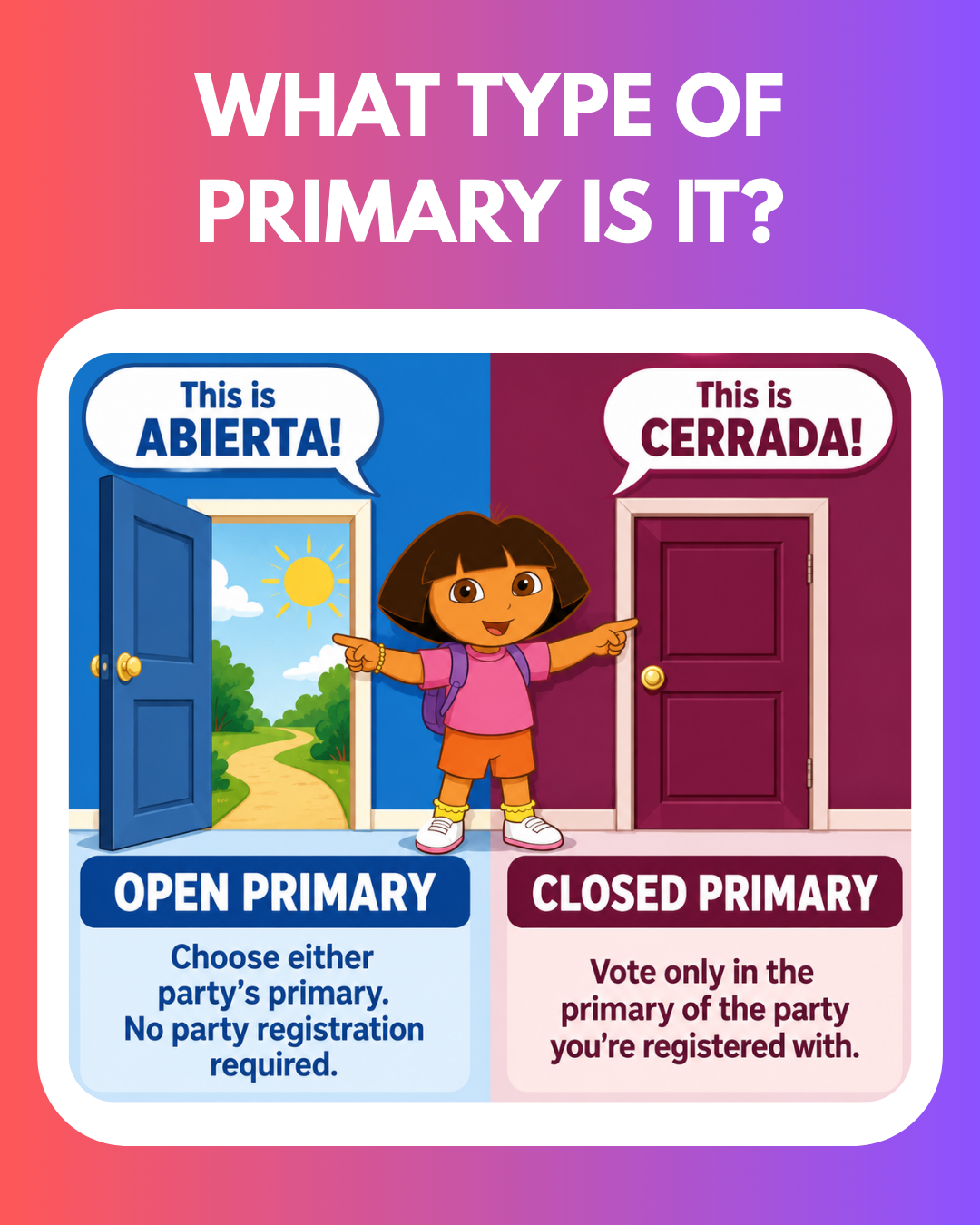
In an open primary, a voter does not have to be registered with a political party to participate in that party’s contest. However, the voter may not vote in more than one party’s primary during the same election.
Fifteen states use open primaries for state and congressional elections: Alabama, Arkansas, Georgia, Hawaii, Michigan, Minnesota, Mississippi, Missouri, Montana, North Dakota, South Carolina, Texas, Vermont, Virginia and Wisconsin.
What is a semi-closed primary?
A semi-closed primary generally allows voters registered with a political party to vote only in that party’s primary, while unaffiliated voters may choose which party primary to join. A voter cannot participate in both. The precise procedure differs by state. An unaffiliated voter may need to request a party ballot, temporarily affiliate with a party or meet a deadline before Election Day.
Several of the final 2026 primaries operate under rules of this kind. Massachusetts and New Hampshire permit unenrolled or undeclared voters to select a party ballot while restricting affiliated voters to their own party’s contest. Rhode Island also allows an unaffiliated voter to choose a party primary, although doing so affiliates the voter with that party unless the voter later disaffiliates. Wyoming’s system includes party-affiliation requirements and advance deadlines, making it more restrictive than a fully open primary.
Semi-closed systems seek a middle ground: they preserve a party’s control over participation by members of other parties while still allowing independents to take part.
What is a closed primary?
In a closed primary, only voters registered with a political party may vote in that party’s contest. A registered Democrat votes in the Democratic primary, a registered Republican votes in the Republican primary, and an unaffiliated voter generally cannot vote in either. Voters who want to participate may have to declare or change their party affiliation before a state registration deadline.
Among the remaining 2026 contests, Florida, Connecticut and Delaware use closed primaries. These rules make voter-registration deadlines especially important, waiting until Election Day to choose a party may be too late. The federal government’s voter guide advises voters to check their state’s rules because primary eligibility depends on both state law and, in some cases, political-party rules.
Nontraditional Systems
Some states use nontraditional systems. Alaska, which votes on August 18, uses a nonpartisan top-four primary, where all candidates appear on the same ballot, and the four candidates receiving the most votes advance to the general election, regardless of party.
Other states use top-two systems or variations that do not fit neatly into the open, semi-closed or closed labels. Election rules can also differ between presidential primaries and state or congressional primaries.
Regardless of which primary system your state uses, make sure to stay informed about election dates, registration rules, and results. Understanding how the process works is a simple way to stay engaged and make your voice heard.